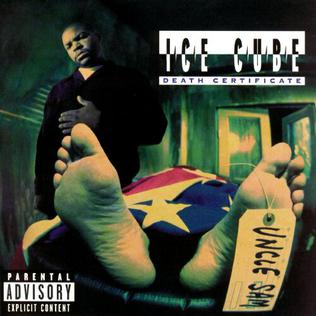
Thirty-five years ago today, on October 29, 1991, Ice Cube released Death Certificate, his second solo studio album, through Priority Records. Three and a half decades later, it remains one of the most forceful and widely discussed albums of its era, a record that captured a moment of anger, urgency, and political argument in American hip-hop.
The album arrived at a turning point in Ice Cube's career. After leaving N.W.A, he had established himself as a solo artist with AmeriKKKa's Most Wanted in 1990. Death Certificate built on that breakthrough while pushing further, both musically and thematically. Working with producers including Sir Jinx and the Boogie Men, Cube shaped a harder, funk-rooted West Coast sound that gave his voice room to be direct, confrontational, and unmistakably personal.
Death Certificate is organized around two contrasting ideas, often described as the Death Side and the Life Side. The first half looks at conditions as they were, including poverty, violence, policing, and limited opportunity. The second half turns toward what Cube argued needed to change, emphasizing self-determination, community responsibility, and Black empowerment. That structure gives the album its tension: it is bleak about the present, but it is also insistent that a different future is possible.
The record also addressed Cube's break with his former group directly, most famously on the closing diss track aimed at N.W.A, and it did not shy away from controversy. Some of its themes and language provoked strong criticism at the time, while critics praised its intensity, focus, and command. Commercially, it was a major success, debuting at No. 2 on the Billboard 200 and reaching platinum certification in December 1991, only weeks after release.
Today, Death Certificate is widely regarded as a landmark political album, not simply because it was provocative, but because it was coherent. Its anger had a target, its arguments had a context, and its music matched its message. For listeners returning to it on its 35th anniversary, it still sounds like an artist refusing to soften his point of view at the exact moment his solo career was taking off.
Sources: Albumism: Ice Cube's Death Certificate album anniversary and Blackout Hip Hop: Ice Cube, 35 years of the masterpiece Death Certificate